

 русский
 Español
 عربى
عربى


Automotive manufacturers are always looking for ways to make production simpler while keeping parts consistent. At the same time, many vehicle components now need to do several things at once. A part may need to be rigid in one area, flexible in another, or provide sealing, grip, insulation, and a good-looking surface.
This is where Two-Shot Molding can be useful. The process allows two materials, colors, or material grades to be molded into one finished component. In a typical process, the first shot creates the main structure, and the second material is molded onto a specific area.
It sounds straightforward, but choosing the right automotive part for this process takes some planning. Material compatibility, part geometry, tooling, production volume, tolerances, and the actual job of the component all matter.
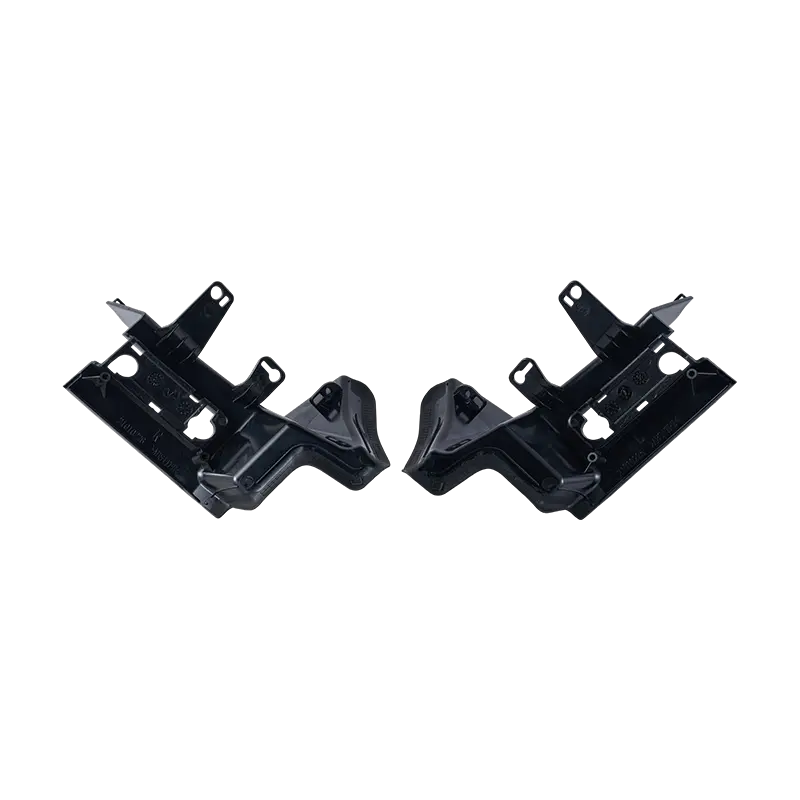
What Is Two-Shot Molding in Automotive Manufacturing?
Two-shot molding, also known as two-component injection molding, uses two injection steps to produce one part.
The first material is injected into the mold to form the base component. The mold or molded part is then moved, rotated, or transferred, depending on the machine and tooling design. The second material is injected into another area.
The two materials can bond through the molding process, either mechanically, chemically, or through a combination of both.
For automotive parts, the process can be used to:
- Combine hard and soft materials
- Create two-color components
- Add soft-touch surfaces
- Mold seals directly onto plastic parts
- Reduce some assembly work
- Keep different features aligned
- Combine several functions into one component
The main reason to use two-shot molding is usually pretty simple: the part needs two different material properties in one place.
Why Two-Shot Molding Is Useful for Automotive Parts
A modern vehicle contains a huge number of components, and many molded parts still need additional assembly after molding.
Take a plastic control knob as an example. The main body may need to be rigid, while the outside needs a softer surface for grip. Traditionally, those pieces could be made separately and assembled later.
Two-shot molding can combine them during production.
| Manufacturing requirement | How two-shot molding can help |
|---|---|
| Rigid and flexible materials | Combines structural and soft sections |
| Multi-color design | Produces different colors in one component |
| Integrated sealing | Adds a flexible sealing area to the base |
| Fewer assembly steps | Can remove some separate assembly work |
| Better alignment | Creates multiple features in one process |
| Surface functionality | Adds grip or soft-touch areas |
Of course, this does not mean two-shot molding is automatically cheaper. The tooling can be more complicated, so production volume and assembly savings need to be considered together.
Automotive Interior Parts Are Common Candidates
Interior parts are often suitable for multi-material molding because appearance and feel matter almost as much as basic function.
Possible applications include:
- Switch panels
- Buttons
- Knobs
- Interior handles
- Trim components
- Air-conditioning controls
- Center-console components
- Steering-wheel-related parts
- Grip surfaces
For example, a switch can have a rigid plastic body and a softer material on the surface that the driver touches.
That gives the part a firm structure while making the contact area feel different. It can also help designers create a particular texture or color combination.
For interior components, buyers should still consider heat, sunlight, cleaning chemicals, and repeated contact before choosing the materials.
Automotive Switches and Control Buttons Can Benefit From Multi-Material Designs
Buttons and switches are small parts, but their design can be surprisingly complicated.
A rigid plastic base can provide dimensional stability, while a second material can be used for the pressing area, grip, sealing, or visual identification.
Different colors can also be molded into the same component, which can be useful for vehicle controls.
| Part type | Possible two-shot function |
|---|---|
| Dashboard button | Rigid base + soft or contrasting surface |
| Window switch | Structural plastic + tactile material |
| Rotary knob | Hard core + grip surface |
| Control panel | Structural frame + decorative section |
| Electronic button | Base component + sealing or protection |
For electronic controls, dimensions need to be controlled carefully because the molded part may need to line up with switches, LEDs, PCBs, or other small components.
Seals and Gaskets Can Be Integrated Into Rigid Components
This is one of the more practical uses of two-shot molding.
Many automotive components need a flexible seal around a rigid plastic housing. This can include:
- Sensors
- Electrical housings
- Connectors
- Fluid-related components
- Control modules
- Lighting assemblies
Instead of making the plastic housing and gasket separately, a compatible elastomer can sometimes be molded directly onto the plastic part.
That means fewer loose pieces to handle during assembly.
The tricky part is the material interface. The two materials have to work together properly, and the finished seal needs to survive temperature changes, vibration, pressure, and exposure to the relevant chemicals.
Connectors and Electrical Components Can Use Two-Shot Molding
Automotive connectors often require tight dimensions and reliable protection from moisture and other environmental conditions.
A rigid engineering plastic can form the main connector body, while a second material can provide sealing, strain relief, insulation, or identification.
Potential applications include:
- Wire connectors
- Sensor connectors
- Cable protection components
- Sealed electrical housings
- Terminal-related components
Material selection is important here. Electrical properties, moisture resistance, temperature resistance, and chemical compatibility all need to be checked.
If metal terminals or other inserts are involved, the molding process also has to protect those components during production.
Automotive Sensors Need Precise Material Integration
Modern vehicles use sensors in many systems, including engine management, temperature and pressure monitoring, safety functions, and driver assistance.
Some sensor housings can use two-shot molding when the design requires a rigid body plus a flexible sealing or protective section.
Important points include:
- Dimensional accuracy
- Material compatibility
- Environmental sealing
- Temperature resistance
- Chemical exposure
- Vibration resistance
- Electrical insulation
Sensors installed near the engine or other demanding areas need extra attention because they may see heat, fluids, and repeated temperature changes.
Soft-Touch and Grip Components Are Another Suitable Application
Drivers interact with plenty of small components inside a vehicle. Handles, knobs, steering controls, and storage components are just a few examples.
A rigid substrate with a softer outer section can provide better grip and a different tactile feel.
Applications may include:
- Steering-wheel control surfaces
- Door handles
- Parking-brake components
- Gear-shift controls
- Interior storage handles
- Rotary controls
The second material can be selected according to flexibility, friction, durability, appearance, and feel.
For interior parts, it is also worth checking resistance to skin oils, cleaning products, sunlight, and heat.
Lighting Components Can Use Two Materials or Colors
Some automotive lighting parts need different material properties within one component.
A rigid plastic section may be combined with another material or color for sealing, mounting, decoration, or other functions.
Possible applications include:
- Lamp bezels
- Light guides with integrated features
- Lighting buttons
- Decorative lighting elements
- Sealed light housings
Lighting components need careful material selection. If a material sits in an optical path, transparency, color stability, surface finish, and long-term performance all need to be considered.
Under-Hood Parts Need More Attention to Temperature
Under-hood components can face a much tougher environment than interior parts. Heat, oil, coolant, vibration, and temperature cycling are all common concerns.
Two-shot molding can still work for some of these applications, including:
- Sensor housings
- Cable management components
- Sealed electrical parts
- Flexible protective features
- Selected fluid-related components
Both materials need to remain stable over the expected operating temperature range.
Thermal expansion is another thing to watch. If two materials expand at very different rates, repeated heating and cooling may put stress on the interface.
What Material Combinations Are Suitable?
Material compatibility is one of the main things to sort out before starting a two-shot project.
Common combinations include:
- Rigid thermoplastic + elastomer
- Rigid thermoplastic + softer thermoplastic
- Two thermoplastics with different properties
- Same polymer family + different colors
Some materials bond well during molding, while others need a particular formulation or surface design.
| Material relationship | Typical purpose |
|---|---|
| Rigid plastic + TPE | Soft-touch or sealing |
| Rigid plastic + TPU | Flexible protective area |
| Thermoplastic + thermoplastic | Structural and functional combination |
| Same material + different color | Visual differentiation |
The right combination depends on the polymer grades, processing temperature, shrinkage, bonding behavior, and required bond strength.
Part Geometry Determines Whether Two-Shot Molding Is Practical
The part itself needs to be designed with the two molding stages in mind.
The first-shot component must be positioned correctly before the second material is injected. Some parts can also use mechanical interlocking features to improve the connection between materials.
Engineers should review:
- Wall thickness
- Draft angles
- Undercuts
- Parting lines
- Gate locations
- Ejection
- Material flow
- Bonding areas
- Shrinkage
A design review before tooling starts can save a lot of trouble later. This is especially important for automotive projects because tooling changes can become expensive once production is underway.
Mold Design Has a Major Influence on Production Results
Two-shot molds are generally more complicated than standard injection molds because they have to handle two molding stages.
Depending on the equipment, the first-shot part may rotate or move to another cavity before the second material is injected.
The mold needs to provide reliable filling, cooling, and ejection for both materials.
Important areas include:
- Cavity arrangement
- Mold rotation or transfer
- Gate design
- Cooling channels
- Venting
- Material separation
- Ejection system
- Tool durability
For high-volume automotive programs, the tooling also needs to be designed for repeated production over a long period.
Production Volume Should Be Considered Before Choosing Two-Shot Molding
Two-shot molding may reduce assembly work, but tooling and development costs can be higher.
For a small order, that extra tooling investment may not make much sense. With a high-volume automotive program, however, reducing assembly and handling can have a bigger effect on the overall production cost.
| Production condition | Key consideration |
|---|---|
| Low volume | Tooling cost may be significant |
| Medium volume | Compare tooling cost with assembly savings |
| High volume | Integrated molding may improve production efficiency |
| Highly automated production | Reduced part handling can be useful |
So the question is not simply "What is the molding price?" The complete production process needs to be considered.
Quality Control Is Critical for Automotive Two-Shot Parts
A two-shot part has to meet requirements for both materials and the interface between them.
Depending on the application, quality checks may include:
- Dimensional inspection
- Material identification
- Bonding inspection
- Color consistency
- Hardness of the second material
- Surface appearance
- Sealing performance
- Functional testing
For automotive production, keeping the molding process stable is important because large quantities of parts may be produced to the same specification.
Before mass production, manufacturers should establish suitable process parameters and inspection requirements.
What Should B2B Buyers Ask a Two-Shot Molding Manufacturer?
When talking to a manufacturer, buyers should provide as much application information as possible.
Useful questions include:
- Which material combinations can the factory process?
- Has the manufacturer made similar automotive parts?
- What two-shot molding machines are available?
- Can inserts or embedded components be supported?
- How are bonding and sealing tested?
- What tolerances can be maintained?
- Can prototypes be produced?
- How is production quality monitored?
- What testing documentation is available?
- Can the supplier handle high-volume OEM production?
It is usually better to involve the molding manufacturer early. Material choice, part design, and tooling are closely connected, so changing one later can affect the others.
When Two-Shot Molding Makes Sense for Automotive Parts
The process makes sense when combining two materials, colors, or functions provides a clear reason to do so.
Typical candidates include interior controls, switches, knobs, handles, soft-touch parts, sealed connectors, sensor housings, gaskets, and some electrical or lighting components.
It may not be worthwhile when the second material adds little functional value, the production volume is too low, or the materials cannot provide the required bonding and environmental performance.
In short, the part should determine whether two-shot molding is appropriate.
A Practical Selection Checklist for Automotive Applications
Before starting development, buyers and engineers can check the following:
| Checkpoint | Key question |
|---|---|
| Function | Why does the part need two materials? |
| Materials | Are the selected polymers compatible? |
| Geometry | Can the part be molded in two stages? |
| Bonding | Will the interface stay stable during use? |
| Temperature | Can both materials handle the environment? |
| Volume | Does the production quantity justify the tooling? |
| Tolerance | Can the required dimensions be maintained? |
| Testing | How will the finished part be tested? |
Going through these points early can prevent some fairly avoidable problems later.
Choosing the Right Automotive Parts for Two-Shot Molding
Two-shot molding is a useful option when an automotive part needs different material properties in different areas. A rigid plastic can provide the structure, while an elastomer or softer material can add sealing, cushioning, grip, or a particular surface feel.
Common applications include switches, knobs, handles, connectors, sensor housings, gaskets, electrical components, and selected lighting parts. But suitability still depends on the actual design, materials, working environment, production volume, and performance requirements.
For B2B buyers, it is worth looking at the whole component before deciding on the manufacturing process. Material compatibility, mold design, bonding, tolerances, environmental resistance, and quality control all need to be considered.
When those requirements line up, Two-Shot Molding can combine multiple functions into one automotive component and reduce some of the assembly work involved in conventional production.
