

 русский
 Español
 عربى
عربى

Automotive components are no longer designed only to perform one simple task.
A part may need to provide structure, support another component, improve handling, protect an internal element, or create a cleaner connection between different materials. As vehicle design continues to place more attention on space, usability, appearance, and production flow, the relationship between individual components is also changing.This is where overmolding and insert molding are receiving more attention.
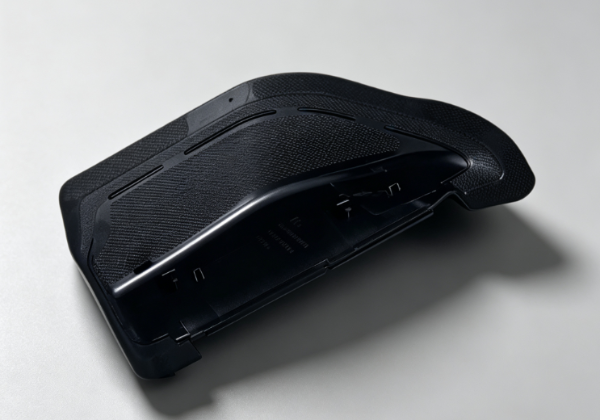
Both approaches allow different materials or components to become part of a molded product. The result can be more than a plastic shell or a separate metal piece. A component can combine several roles within the same product.
For automotive mold designers, this creates an interesting shift. The mold is no longer viewed only as a tool for giving plastic a particular shape. It can become part of a wider component integration strategy.
The idea is relatively simple.
Overmolding adds a new material around an existing molded part or component. Insert molding places an existing insert into the molding process so that the finished component combines the insert with the molded material.
The applications can vary widely. Interior components, exterior parts, control elements, connectors, handles, protective covers, and other automotive products may use these approaches when their designs call for multiple materials or integrated functions.
The growing interest is not simply about adding another manufacturing method. It is about asking a different question: Can several product requirements be handled within one component instead of being separated into many individual parts?
Why Are Automotive Components Becoming More Integrated?
A modern vehicle contains a large number of individual components. Each one has a place in the overall system. Yet every separate component can also create another design, handling, assembly, and quality consideration.
This has encouraged automotive product designers to look more closely at integration.
Consider a simple interior control component. It may need a rigid structure to maintain its shape. At the same time, the surface may need a different material to provide a particular touch or visual effect. A separate assembly process could join these parts later.
Overmolding offers another way to approach the same design.
The different material can become part of the molded component during production. This can give designers more freedom to consider the structure and surface together rather than treating them as completely separate products.
Insert molding takes a related approach from another direction. Instead of adding a second molded layer around a finished part, an existing component such as a metal insert can become part of the molded product.
This can be useful when a vehicle component needs both plastic and another material to perform different roles.
The important change is in the way the component is considered.
Instead of asking, "How can this part be assembled?" designers may also ask, "Which functions can be brought together during molding?"
That question can influence the shape of the component, the mold structure, material selection, and the later production process.
How Do Overmolding and Insert Molding Add Functions to One Part?
The main attraction of these molding approaches is their ability to combine roles.
A traditional component may consist of several separate pieces. One provides the main structure. Another creates a surface layer. A third may provide support or connection. These pieces are then brought together during assembly.
With overmolding or insert molding, some of these relationships can be planned earlier.
A molded automotive component may combine:
- Structural support
- Surface protection
- Grip or handling features
- Material separation
- Connection functions
- Decorative elements
- Protection around another component
- Support for embedded parts
The actual combination depends on the product.
For example, a handle may need a firm internal structure and a more comfortable outer surface. A separate metal element may also be required to provide additional support. Instead of treating these as unrelated pieces, an integrated molding approach can bring them into the same component.
This does not mean that every automotive part should use overmolding or insert molding. The value depends on the product's design and production requirements.
The important point is that molding can become a way to combine functions rather than simply create shape.
This also changes how automotive molds are discussed. Mold design becomes closely connected with product architecture. A decision made during mold development can influence how several materials and components work together after production.
What Role Does the Automotive Mold Play in This Process?
The automotive mold sits at the center of the integration process.
When a component contains only one simple molded material, the mold mainly needs to support the desired shape and production process. A more integrated component introduces additional considerations.
The mold may need to accommodate an existing insert. It may also need to create different areas for different materials. The position of the insert, the shape of the component, and the intended appearance all become connected.
This means mold design needs to begin with the complete component in mind.
A useful design discussion may include questions such as:
| Design Consideration | Why It Matters |
|---|---|
| Component structure | Different materials may perform different roles within the same part |
| Insert position | The insert needs to become part of the finished component as intended |
| Surface areas | Overmolded areas can influence appearance and handling |
| Component shape | The shape needs to support both the product function and molding process |
| Material relationship | Different materials need to work together as part of one component |
| Assembly planning | Integration during molding can influence later production steps |
| Maintenance needs | Mold design can affect how easily production issues are identified and managed |
The mold is therefore not an isolated production tool.
It becomes part of a broader conversation between product designers, mold makers, material specialists, and production teams.
When those groups work from the same component concept, it becomes easier to identify which functions should be integrated and which should remain separate.
How Can Overmolding Support Automotive Interior Design?
Automotive interiors provide many opportunities for integrated component design.
People interact with interior parts every day. They touch handles, buttons, covers, trim pieces, storage elements, and other components. These products may need to combine structural support with surface features.
Overmolding can provide a way to bring these roles together.
A rigid base can support the overall shape, while a second material can form part of the outer surface. This can change the way the component feels in the hand and how its different sections are visually separated.
The design possibilities also extend beyond touch.
A surface material can help distinguish one area from another. A molded layer can cover part of a component. An integrated material transition can create a particular visual effect without requiring every section to be treated as a separate product.
This matters because automotive interiors often have many small components.
If every functional difference requires a completely separate piece, the overall assembly can become more complicated. When appropriate, integrated molding can give designers another option.
The same thinking can apply to interior control components.
A component may need a solid base, a distinct surface, and a location for another element. Overmolding can allow these requirements to be considered together during the design stage.
The result is not necessarily a more complicated product. In some cases, it can be a more unified one.
Where Does Insert Molding Fit Into Automotive Component Design?
Insert molding becomes particularly interesting when an automotive component needs a molded material and an existing insert to work together.
Metal inserts are one example.
A metal element may provide a different function from the surrounding plastic. It may act as a connection point, support another component, or form part of the internal structure.
Instead of molding the plastic component separately and attaching the metal element later, insert molding can incorporate the insert into the molded part.
This changes the production relationship between the two materials.
The insert is no longer simply an item added after molding. It becomes part of the original component concept.
For automotive mold designers, this creates a need to understand the insert and molded material as one product.
The shape of the insert matters. Its position matters. The surrounding plastic matters. The finished component must also fit into the vehicle's larger assembly.
This is why insert molding is not simply a matter of placing a metal piece into a mold.
The component needs to be considered as a whole.
An integrated approach can also influence product development. Designers may discover that an insert can perform a role that would otherwise require another separate component. That can open up new ways to arrange the part.
Could Overmolding and Insert Molding Change Automotive Assembly?
One of the more interesting questions is what happens when molding and assembly become more closely connected.
Traditional production often treats molding and assembly as separate stages. A component is molded, removed, inspected, and then assembled with other parts.
Overmolding and insert molding can blur that separation.
Some relationships between materials or components can be created during molding itself. This does not eliminate assembly from automotive production. Many components will still require additional assembly.
It does, however, give manufacturers another way to think about the sequence.
Suppose two elements need to remain closely connected throughout the life of a vehicle. Designers can ask whether that connection should be created during molding or later during assembly.
The answer will depend on the component.
For some products, separate assembly may remain more practical. For others, integrating the relationship into the molded component may make more sense.
This is why the discussion should not focus only on whether overmolding or insert molding can replace assembly.
A more useful question is whether they can move some assembly thinking into the mold design stage.
That shift can influence how production teams plan the entire component workflow.
Should Material Selection Be Considered Earlier in Automotive Mold Projects?
Material selection becomes more important when multiple materials share the same component.
With a conventional single-material product, the design conversation can focus mainly on the requirements of that material. Overmolding introduces another layer. Insert molding introduces another relationship between the molded material and the insert.
The materials need to make sense together.
This does not mean that every material combination will be suitable. Automotive product development needs to consider the intended application, environmental conditions, surface requirements, appearance, and expected use.
The material decision can also affect the mold.
A component designed around one material may require a different mold approach when another material is added. The areas where materials meet become part of the design rather than a minor detail.
This is one reason why material discussions should happen before the mold is finalized.
When the material concept changes late in the project, other parts of the design may also need to change.
An earlier conversation can help designers understand whether the intended combination supports the overall component concept.
It can also prevent the mold from being designed around a simplified version of the product that later becomes difficult to adapt.
Can Integrated Molding Create New Opportunities for Automotive Parts?
The most interesting opportunities may come from parts that have several small requirements rather than one obvious function.
An automotive component does not always need a dramatic redesign to benefit from integration.
Sometimes the opportunity is much smaller.
A separate protective piece may be incorporated into another component. A grip area may become part of the molded surface. A metal insert may become part of the same product instead of being attached later. A decorative section may be integrated with a functional housing.
These changes can affect how designers think about the boundary between components.
The traditional question is often:
"Where should one part end and another part begin?"
Overmolding and insert molding introduce another question:
"Do these functions really need to belong to separate parts?"
That is a useful design perspective for automotive mold development.
It encourages teams to look beyond individual components and consider the relationship between them.
At the same time, integration should have a clear purpose. Adding more materials or functions to one part does not automatically make the design more suitable. A component still needs to be practical to manufacture, inspect, handle, install, and maintain.
The real opportunity lies in matching the molding approach to the product's needs.
For automotive mold manufacturers, this creates a wider role in product development. Their work is not limited to producing a cavity that follows an existing drawing. Mold design can influence how materials meet, how components are integrated, and how several product functions are brought together.
As automotive components continue to evolve, overmolding and insert molding give designers more ways to approach that challenge. The focus is shifting from making individual parts toward understanding how different functions can exist within the same component.
That shift can begin with a simple mold design question: what else could this component do if its materials, structure, and related parts were considered together?
