

 русский
 Español
 عربى
عربى


In automotive lighting production, Retro Reflector Mold sit in a very specific position. They do not just shape plastic. They define how light behaves once the product is installed on a vehicle. A small change in the mold surface can influence reflection, clarity, and long-term stability.
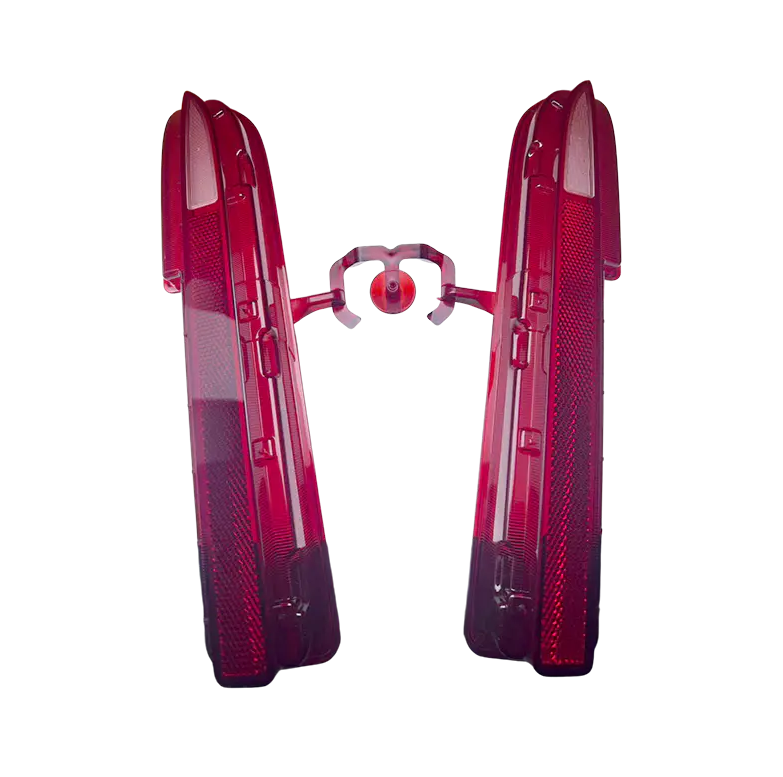
Because of this, durability is not only about how long the mold lasts. It is also about how consistently it performs over repeated cycles. A mold that still works physically may already start drifting in output quality if its condition changes slowly over time.
Improving durability is less about a single upgrade and more about managing a set of small conditions that work together.
Why does mold surface condition matter so much over time?
The internal surface of a retro reflector mold is in constant contact with material during production. Even when everything runs smoothly, that surface is never completely idle.
Each cycle leaves behind a small interaction:
- Heat transfer between material and steel
- Pressure applied during filling
- Tiny friction points during release
None of these actions is destructive on their own. But repeated thousands of times, they begin to change how the surface behaves.
At first, the change is almost invisible. A slight difference in gloss. A small shift in reflection uniformity. Over time, these small differences become part of the product output.
Maintaining surface condition is one of the most direct ways to extend usable mold life.
How does material flow influence mold wear?
Material does not move through a mold in a perfectly uniform way. Even in a well-controlled system, flow patterns can vary slightly from cycle to cycle.
When flow is uneven, certain areas of the mold receive more contact pressure than others. That imbalance creates localized wear.
It may appear in subtle ways:
- One side of the cavity becoming slightly smoother than the other
- Fine details losing sharpness gradually
- Slight change in reflective texture consistency
The challenge is that this does not stop production. It just slowly shifts quality.
Designing for smoother flow paths and reducing sudden direction changes inside the cavity can help reduce long-term wear patterns.
What role does temperature stability play in durability?
Temperature is one of the quiet forces behind mold condition.
During each cycle, the mold heats up and cools down. This happens repeatedly without pause. If temperature changes are uneven, different areas of the mold expand and contract at different rates.
Over time, this creates stress points inside the structure.
Effects often include:
- Small surface fatigue in high-contact areas
- Gradual loss of dimensional stability
- Changes in how material fills fine details
Keeping temperature behavior stable does not mean keeping it constant at one level. It means avoiding sudden shifts and uneven distribution.
In practice, this is often more about balance than control.
Why does cleaning practice affect long-term performance?
Cleaning is often treated as a maintenance task, but it also plays a role in durability.
Residue from production can build up slowly on mold surfaces. It may not be visible immediately, but it changes how material interacts with the cavity.
When buildup occurs, it can lead to:
- Uneven surface contact
- Slight changes in product clarity
- Increased friction during release
If left unchecked, this adds extra stress during each cycle.
Regular, careful cleaning helps maintain a stable surface condition. The goal is not only cleanliness, but consistency in surface behavior.
How does mold structure design influence wear distribution?
Not all parts of a mold wear evenly. Some areas naturally carry more load.
Corners, fine structures, and high-detail regions tend to experience more stress. If the design does not account for this, wear can concentrate in specific zones.
Over time, this uneven distribution creates imbalance in performance.
A more balanced design approach considers:
- How material enters the cavity
- Where pressure concentrates during filling
- How parts release after cooling
By spreading load more evenly, the mold experiences slower, more uniform aging.
Can production speed affect mold lifespan?
Speed changes how the mold behaves under real conditions.
When cycles run faster, there is less time for cooling and recovery between each operation. That means the mold stays under thermal and mechanical influence for longer periods.
This does not automatically reduce lifespan, but it changes stress patterns.
At higher speed:
- Temperature cycles become more intense
- Material flow becomes more repetitive
- Mechanical wear occurs more frequently
If not balanced with proper conditions, this can accelerate surface fatigue.
Durability in this case is not just about strength. It is about how well the mold adapts to rhythm.
How does alignment and installation affect long-term wear?
A mold does not operate alone. It is part of a system. How it is installed and aligned influences how forces are distributed.
Even a small misalignment can create uneven pressure during operation. This leads to one side of the mold carrying more load than the other.
The effect builds slowly:
- One area wears faster
- Surface detail becomes inconsistent
- Overall output shifts slightly over time
Proper alignment ensures that force is shared evenly. It is not a dramatic adjustment, but it has long-term impact on durability.
What are common early signs of mold fatigue?
Mold wear rarely appears suddenly. It develops in stages that are easy to overlook if production is running smoothly.
Some early indicators include:
- Slight change in surface reflection behavior
- Minor variation in part-to-part consistency
- Increased need for small process adjustments
- Subtle changes in release behavior
These signs do not always indicate immediate failure. They often suggest that internal conditions are shifting.
Recognizing these changes early allows for controlled maintenance instead of reactive repair.
How does maintenance timing influence durability?
Maintenance is not just about action. Timing matters just as much.
If maintenance happens too late, wear has already spread. If it happens too early, it may not address actual stress points.
A more practical approach is based on observation rather than fixed timing.
Focus areas usually include:
- Surface condition changes
- Flow behavior consistency
- Cooling pattern stability
- Release smoothness
By tracking these indicators, maintenance becomes more adaptive.
Key factors influencing retro reflector mold durability
| Factor Area | What Happens in Practice | Long-term Impact |
|---|---|---|
| Surface condition | Gradual texture change | Reduced optical consistency |
| Material flow | Uneven pressure distribution | Localized wear patterns |
| Temperature cycles | Repeated expansion and cooling | Structural stress buildup |
| Cleaning practice | Residue accumulation over time | Surface interaction changes |
| Mold design | Uneven load distribution | Accelerated wear zones |
| Production speed | Shorter recovery time between cycles | Increased cycle stress |
| Alignment setup | Slight force imbalance | Asymmetric wear development |
Why does durability depend on many small controls?
There is no single factor that defines mold life. Instead, durability is shaped by many small, repeated conditions.
A mold may be strong in design, but still wear quickly if temperature fluctuates. It may be well-maintained, but still develop uneven wear if flow is unbalanced.
Each factor is small on its own. Together, they define how the mold behaves over time.
Durability is less about resisting change and more about managing it in a controlled way.
The more stable each small element remains, the slower the overall system shifts.
