

 русский
 Español
 عربى
عربى


In automotive lighting production, fog lights look simple from the outside. A compact housing, a clear lens, a stable structure. Yet behind that simplicity sits a mold that has to control shape, surface quality, and repeatability at the same time.
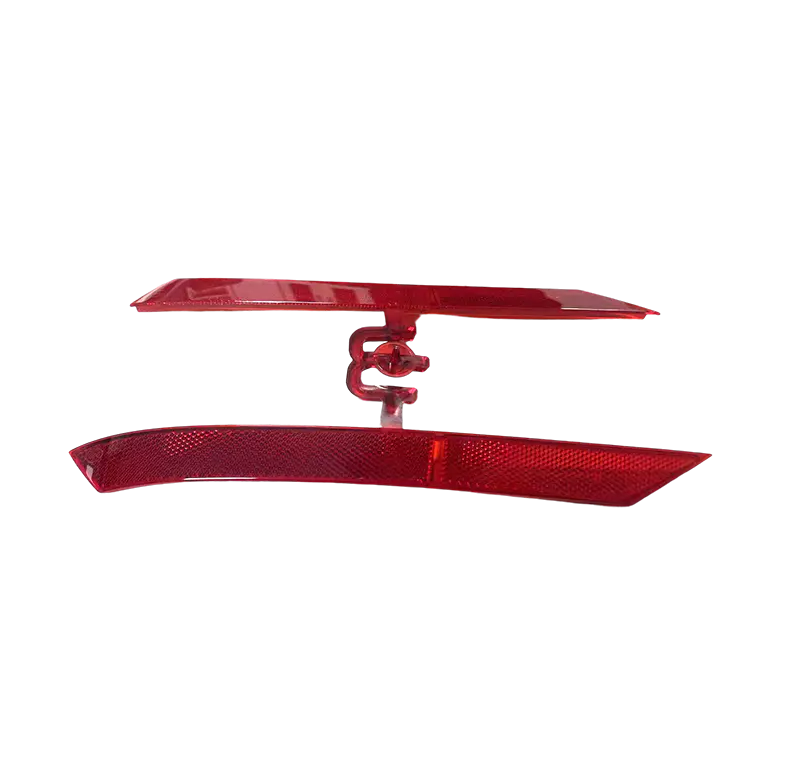
Fog lights mold production is not just about shaping plastic. It is about keeping balance across design accuracy, surface behavior, and long-term stability under repeated use. Small changes in any part of the process can affect how the final part looks and performs.
Most production challenges do not appear suddenly. They build slowly through design decisions, material response, and processing conditions.
Why is precision such a constant concern in fog light molds?
Fog lights are part of a vehicle's visible design. Even slight differences in shape or alignment can be noticeable when installed.
A mold must reproduce the same geometry every cycle. That sounds straightforward, but real production adds variation.
- Small alignment shifts during assembly
- Uneven pressure distribution inside the mold
- Subtle wear from repeated cycles
Each of these can create tiny deviations. On a single part, they may not matter. Across hundreds or thousands of pieces, they become visible.
Precision is not only about initial design. It continues throughout the mold's working life.
How does surface quality become difficult to control?
Fog lights depend heavily on appearance. Light transmission, clarity, and smoothness all play a role in final performance.
Inside the mold, surface condition directly affects the finished part. If the internal surface is not stable, the plastic reflects that condition.
Common issues include:
- Slight unevenness on reflective areas
- Marks that appear during cooling
- Inconsistent texture after repeated cycles
These are not always caused by one factor. They can come from small variations in temperature, material flow, or surface wear.
Once surface inconsistency appears, it tends to repeat until adjustments are made.
What makes material behavior unpredictable at times?
Even when conditions are controlled, material does not always respond in a fixed way.
Plastic used in fog light production can react differently depending on:
- Flow during injection
- Cooling speed inside the mold
- Pressure distribution during shaping
Two cycles can look similar on the machine, but behave slightly differently inside the cavity.
This variability is subtle. It does not stop production, but it introduces small differences that accumulate over time.
Operators often notice it first through visual inspection rather than machine readings.
Why does mold wear develop gradually instead of suddenly?
Molds are designed for repeated use, but repetition itself creates change.
Every cycle involves:
- Contact with material under pressure
- Temperature shifts
- Mechanical movement during opening and closing
These actions do not damage the mold immediately. Instead, they slowly change its internal condition.
Wear often appears as:
- Slight loss of edge sharpness
- Small changes in cavity definition
- Gradual shift in surface smoothness
Because these changes happen slowly, they are easy to overlook until part quality begins to vary.
How does cooling affect overall stability?
Cooling is often underestimated in mold production. It is not just the final step. It influences how the part settles inside the cavity.
If cooling is uneven, different areas of the fog light housing may shrink at different rates.
This can lead to:
- Minor shape distortion
- Alignment issues during assembly
- Surface tension marks
Cooling behavior depends on flow inside the mold, contact time, and material response.
When cooling is not balanced, even a well-designed mold can produce inconsistent results.
What role does mold design complexity play in production challenges?
Fog lights are not flat parts. They often include curves, mounting points, and optical surfaces.
This makes mold design more sensitive to small details.
Complex geometry can introduce:
- Uneven material flow paths
- Difficult-to-cool areas
- Regions where pressure is harder to maintain
Each added feature increases the number of variables in production.
A design that looks stable in theory may behave differently under real production cycles.
How does maintenance influence long-term performance?
Mold performance is not only defined at the design stage. It continues to evolve during use.
Regular maintenance affects:
- Surface condition
- Alignment stability
- Internal flow consistency
When maintenance is delayed, small issues tend to expand. A slight surface change can affect multiple production cycles before it becomes visible.
In many cases, maintenance is less about fixing damage and more about preventing gradual drift in performance.
What happens when production speed increases?
Higher production speed is often desired, but it changes internal conditions.
Faster cycles can reduce:
- Cooling time
- Stabilization time
- Adjustment windows between cycles
While output increases, the system has less time to recover between operations.
This can make small variations more noticeable. A process that was stable at a slower pace may begin to show inconsistency when accelerated.
Speed does not directly cause defects, but it reduces tolerance for variation.
How do small deviations accumulate in real production?
One of the less visible challenges in fog light mold production is accumulation.
A single deviation may be small:
- A slight shift in alignment
- A minor surface change
- A small variation in cooling response
Individually, these are easy to ignore. Over time, they combine.
The result is not a sudden failure, but a gradual drift in part quality.
This is why monitoring is often more important than reacting after problems appear.
Common challenge areas in fog lights mold production
| Challenge Area | What It Looks Like in Practice | Underlying Cause |
|---|---|---|
| Precision control | Slight part variation over time | Alignment and cycle variation |
| Surface quality | Changes in clarity or texture | Mold wear and flow inconsistency |
| Material behavior | Uneven response during forming | Thermal and pressure changes |
| Cooling balance | Small shape distortion | Uneven temperature distribution |
| Mold wear | Gradual loss of definition | Repeated mechanical contact |
| Design complexity | Flow imbalance in certain zones | Irregular geometry |
| Production speed | Reduced stability at higher output | Shorter cycle recovery time |
How do operators usually notice early signs of issues?
In practice, problems are rarely detected through a single indicator.
Operators often rely on:
- Visual comparison between parts
- Subtle changes in cycle behavior
- Small adjustments required during setup
- Differences in assembly fit
These signs are usually gradual. They do not interrupt production immediately, but they signal that something is shifting.
Experience plays a large role in recognizing these patterns early.
Why is balance more important than perfection in mold production?
Fog lights mold production is not about achieving a single perfect cycle. It is about maintaining balance across many cycles.
Conditions change slightly every time the mold runs. Materials vary. Temperature shifts. Mechanical wear accumulates.
A stable system does not eliminate variation completely. It manages it within a controlled range.
When that balance is maintained, production remains consistent even with small changes in conditions.
The challenge is not removing variation, but keeping it from growing unnoticed over time.
