

 русский
 Español
 عربى
عربى


Night driving often feels familiar until the road changes without warning. A clear view can fade into haze. Street lights may disappear. Reflections from moisture in the air can scatter light in ways that feel confusing. In these moments, drivers rely on more than habit. They rely on how their vehicle interacts with the environment around it.
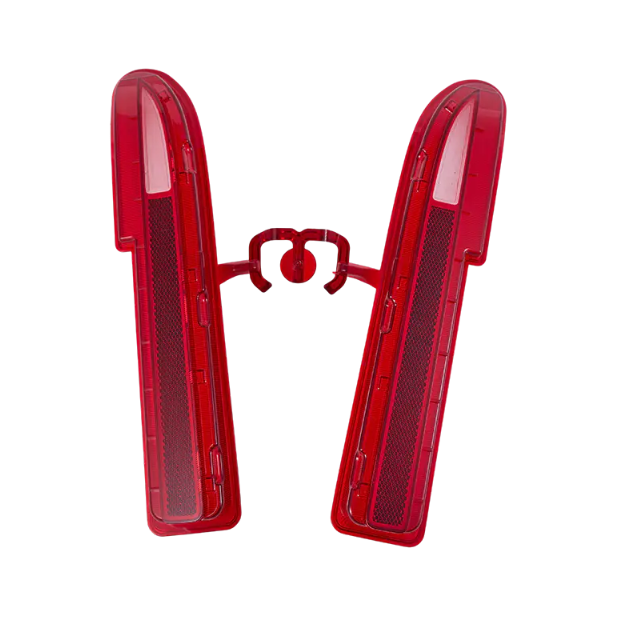
Fog lights are often seen as a small detail on a vehicle. Yet their role becomes noticeable when visibility shifts. They are not meant for every situation. Used at the right time, they support a calmer and more controlled driving experience. Used at the wrong time, they can create distraction, both for the driver and for others on the road.
This discussion looks at when fog lights at night make sense, how they fit into real driving situations, and what factors shape their effectiveness in everyday use.
Why does night visibility change so quickly?
The road at night is not static. Light behaves differently depending on what is in the air. Clear conditions allow light to travel in a straight path. When particles such as mist, dust, or light rain appear, light begins to scatter.
This scattering effect changes how drivers see distance and depth. Objects may appear closer than they are. Edges become softer. Road markings can fade in and out depending on angle and surface reflection.
Headlights are designed to project forward and cover distance. In certain conditions, that forward projection becomes less useful. Light reflects back toward the driver instead of reaching the road ahead. This is where fog lights start to have a role.
What makes fog lights different from standard headlights?
Fog lights sit lower on the vehicle. Their beam is directed closer to the ground. This creates a flatter spread of light rather than a long forward reach.
The purpose is not to extend vision far ahead. The purpose is to improve visibility close to the vehicle where immediate decisions happen. The lower angle helps reduce the amount of light that reflects off airborne particles.
This difference changes how the road looks. Edges become clearer. Lane markings appear more stable. The surface texture of the road is easier to read.
A simple comparison helps explain this contrast:
| Lighting Type | Beam Direction | Typical Use at Night | Visual Effect |
|---|---|---|---|
| Headlights | Forward and extended | General driving in clear conditions | Long-distance visibility |
| Fog lights | Low and wide | Reduced visibility situations | Improved near-ground clarity |
When should fog lights be used at night?
Fog lights are most helpful when visibility is reduced but not completely lost. They support the driver in situations where the road is still visible but lacks clarity.
Common scenarios include:
Light fog or mist
When a thin layer of fog is present, headlights may reflect strongly. Fog lights help reduce this reflection and improve contrast on the road surface.
Light rain at night
Rain can create glare, especially when it meets artificial lighting. Fog lights provide a softer illumination that helps balance the visual field.
Dust or smoke in the air
In some environments, fine particles can affect visibility in a similar way to fog. Lower light projection can reduce visual noise.
Poorly lit roads
Roads without consistent lighting may benefit from the added near-field visibility that fog lights provide.
Curved or uneven road surfaces
Changes in elevation or direction can reduce the usefulness of forward-facing light alone. Fog lights help define the road edges more clearly.
These situations share a common feature. Visibility is not gone, but it is unstable. Fog lights support stability rather than distance.
Can fog lights reduce glare for the driver?
Glare is not only about brightness. It is about how light reflects back into the driver's eyes. At night, even a moderate amount of reflected light can feel intense.
Fog lights reduce glare by changing the angle of illumination. Less light is directed into the particles in the air. More light stays closer to the road surface.
This creates a more comfortable viewing experience. The driver spends less effort trying to interpret scattered light. The eyes adjust more easily to the environment.
Glare from other vehicles is still a factor. Fog lights do not remove this issue. They only help manage the light coming from the driver's own vehicle.
Are there situations where fog lights should not be used?
Fog lights are not a default setting for night driving. In clear conditions, they can create unnecessary brightness close to the vehicle. This may reduce contrast at a distance.
Situations where they are less suitable include:
Clear, dry nights
Headlights alone provide sufficient visibility. Additional lighting may not improve the situation.
Heavy traffic environments
Extra light can affect other drivers. It may cause distraction or discomfort.
Well-lit urban areas
Street lighting already supports visibility. Fog lights add little benefit.
High-speed driving on open roads
The focus shifts toward distance rather than near-ground visibility.
Using fog lights in these conditions does not usually create a safety advantage. It can sometimes make visual balance less stable.
How do driving habits affect fog light effectiveness?
The way a driver uses lighting matters as much as the equipment itself. Fog lights are most effective when combined with steady and attentive driving.
Some habits that support better use include:
- Maintaining a consistent speed that matches visibility
- Keeping a stable following distance
- Avoiding sudden steering changes
- Observing how light interacts with the road ahead
Drivers often adjust naturally when visibility changes. Fog lights should support these adjustments, not replace them.
A simple overview of how daily factors influence performance:
| Factor | Influence on Use | Practical Impact |
|---|---|---|
| Driver awareness | Guides when lights are needed | Improves timing of activation |
| Road condition | Shapes light reflection | Affects clarity and contrast |
| Traffic density | Alters visual environment | Changes how light is perceived |
| Vehicle condition | Maintains consistent output | Supports stable illumination |
| Weather variation | Shifts visibility patterns | Requires flexible response |
How do fog lights interact with other road users?
Lighting affects more than one vehicle. What works for one driver may influence others nearby. Fog lights can be helpful, but they should not create discomfort.
In low visibility, other drivers are also adapting. Clear and balanced lighting supports mutual awareness. Overuse or misuse of lights can make it harder for others to judge distance and movement.
Pedestrians and cyclists are also part of this environment. Lower and softer lighting can help them remain visible without being overwhelmed by glare.
The goal is not just to see better. It is to be seen in a way that supports shared road use.
What role do environment and location play?
Different locations create different lighting needs. Rural roads, coastal areas, and urban streets each present unique conditions.
- Rural areas often lack artificial lighting. Fog lights can support visibility when natural conditions change.
- Coastal regions may experience shifting mist. Lighting needs can change within a short distance.
- Urban environments have multiple light sources. Fog lights may be less noticeable or less necessary.
The environment shapes how light behaves. Drivers often learn to recognize patterns over time. Fog lights become part of that adaptive process.
How does regular inspection support consistent use?
Lighting systems change gradually. Small shifts in alignment or condition may not be obvious at first. Over time, they can affect performance.
Routine checks help maintain stable operation. Clean lenses, secure fittings, and responsive controls all contribute to consistent results.
Inspection is not only about fixing problems. It is about noticing subtle changes before they affect driving comfort.
How do drivers decide in real time?
Decisions on lighting often happen quickly. There is rarely a clear signal that says when to switch modes. Drivers rely on observation.
A few simple questions often guide the choice:
- Is the road surface clearly visible?
- Does the light reflect strongly back toward the vehicle?
- Are road edges easy to follow?
- Is there a need for more stable near-ground visibility?
If the answers suggest reduced clarity, fog lights may help. If visibility is stable and balanced, they may not be needed.
These decisions are part of a continuous process. Drivers adjust as conditions shift, sometimes within a short stretch of road.
Night driving is shaped by small details. Light, surface, and movement interact in ways that are not always predictable. Fog lights fit into this system as a supportive tool. Their value depends on timing, awareness, and the environment in which they are used.
