

 русский
 Español
 عربى



Pricing custom Auto Parts Molds is rarely straightforward—quotes can swing wildly between suppliers, and it's not always obvious why a seemingly simple part carries a surprisingly high tooling price tag. For automotive OEMs and tier suppliers, getting a clear handle on what drives these costs is critical for accurate budgeting and project planning. A basic plastic cover only needs a simple, low-cost tool, while a component with integrated clips, reinforcing ribs, and contoured surfaces demands far more intricate work. Below are the core factors that shape mold pricing, plus practical guidance for keeping costs in line without cutting corners on quality.
Part Design and Complexity
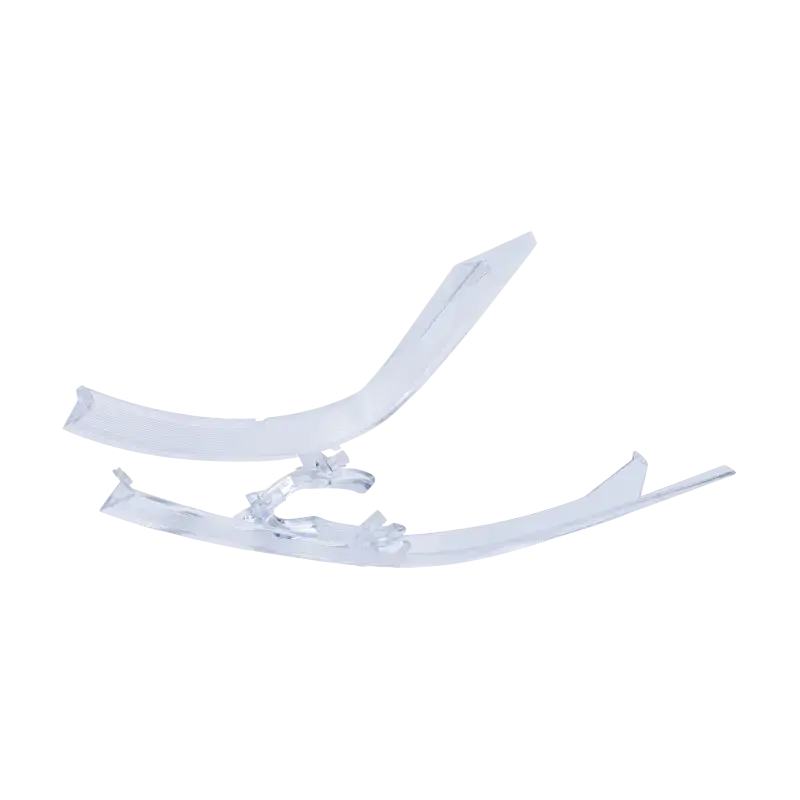
First and foremost, the part itself—its shape, size, and level of detail—does more to set mold cost than any other single factor. Parts with deep ribs, undercuts, ultra-thin walls, or free-form curves require more precise programming, longer machining time, and careful demolding planning. Take a dashboard trim panel, for instance: if it's packed with mounting bosses and snap-fit features, you're almost certainly looking at sliding cores or lifters to release parts cleanly without damage. Larger parts also add cost simply by requiring more steel for the mold base and heavier equipment to machine.
That's why it pays to loop your mold maker in early, before you finalize the design. A tiny tweak to a rib angle or a mounting tab can often simplify tool construction drastically, with zero impact on how the part performs in the vehicle. It's also worth hashing out gate location and ejection direction upfront—both choices shape the entire mold layout and can make or break part quality down the line.
Mold Material and Steel Grade
The type of steel you build the mold from is another major cost driver, and it's about more than just upfront price—it also dictates how long the tool lasts and how much maintenance it needs over its life. There's no one-size-fits-all answer here: the right grade depends on production volume, the material being molded, and how harsh the process conditions are.
| Mold Steel | Core Properties | Common Use Case |
|---|---|---|
| P20 | Good machinability, reliable dimensional stability | Standard for most general-purpose injection molds and mid-volume runs |
| H13 | High toughness and heat resistance | High-temperature molding, abrasive materials, long production runs |
| Stainless mold steel | Strong corrosion resistance | Projects where rust prevention is a top priority |
Premium grades aren't always the smart pick. If you're only running a few thousand parts for a low-volume program, a higher-end steel is just wasted money. For high-volume, long-running programs, though, the extra investment in a tougher grade usually pays for itself in longer tool life and less downtime. Talk through your volume targets and process specs with your supplier to land on the best fit—don't just default to the cheapest or most expensive option.
Mold Size and Number of Cavities
How many cavities the mold has, and how big the overall tool is, will make a big difference in your upfront bill. A single-cavity mold makes one part every cycle; a four-cavity tool makes four, assuming your press can handle the larger mold size and clamping force. Multi-cavity molds cost more to build, no question—you're machining more features, balancing the gating system, and using a bigger mold base. But at high enough volumes, that upfront premium pays off fast in lower per-part costs.
As a rough rule of thumb: low-volume prototype work sticks with a single-cavity mold; medium volume with fluctuating demand can go either way, depending on your forecast; and steady high-volume production almost always favors multi-cavity tooling.
Part size, press capacity, cycle time, and quality standards all factor in too. Single-cavity tools are lower risk if demand is uncertain, but if you know you'll be running hundreds of thousands of parts a year, multi-cavity is almost always the better financial call. Always run the math: compare the upfront tool cost against the per-part savings over the full life of the program.
Machining and Manufacturing Requirements
The actual work of building the mold—machining, finishing, assembly—also adds up fast, and the more complex the features, the more labor hours go into it. Building a custom tool involves 3D programming, CNC milling, EDM work for tight features, polishing, assembly, and final inspection. Deep grooves, thin slots, fine surface textures, and tight tolerances all slow down machining and require extra quality checks.
Late design changes are one of the biggest avoidable costs. If you modify a core or cavity after steel has already been cut, you're looking at rework, extra lead time, and sometimes full replacement of components. To head this off, provide complete, released 2D drawings and 3D CAD files before work starts, and lock in critical dimensions, tolerances, and surface specs with your supplier up front.
Molded Part Material
What you're molding—the actual plastic resin or metal alloy—has a surprisingly big impact on mold design and cost. Different plastics flow differently, shrink at different rates, and run at different temperatures. All of that changes how you size the cavity, lay out cooling lines, and even what steel grade you need.
Glass-filled resins, for example, are much more abrasive than unfilled plastics and will wear out mold surfaces much faster. For those materials, you'll probably need a harder steel or a surface coating to get acceptable tool life—that adds upfront cost, but saves money long-term. Metal parts are a whole different ballgame: die-casting molds have to stand up to molten metal and extreme heat, so they're built completely differently from plastic injection tools. Always share the exact resin or alloy grade when you request a quote. Saying “automotive plastic part” doesn't give a mold maker nearly enough information to price accurately.
Cooling, Ejection, and Mold Testing
Cooling systems, ejection mechanisms, and final testing are often overlooked cost factors, but they matter a lot for both tool price and production efficiency. In injection molding, good cooling is what keeps cycle times short and prevents warping. Simple parts with uniform wall thickness can get by with a basic cooling line layout, but complex parts with thick and thin sections often need a much more elaborate setup—that's extra design work and extra machining.
Ejection is another consideration. Simple flat parts can use standard ejector pins, but parts with deep ribs, undercuts, or fragile features may need lifters or stripper plates to avoid damage during demolding. Every mold needs trial runs after assembly to check dimensions, surface finish, flash, and other defects. When you're comparing quotes, make sure you know what's included: some suppliers bundle initial trials, sample parts, and basic adjustments into the base price, while others charge for them as separate line items.
How to Control Custom Mold Costs
You don't have to cheap out on steel or strip out every functional feature to keep mold costs in check. The goal is to build a tool that does exactly what you need it to do, without over-engineering things you don't need.
Before you send out RFQs, put together a complete package with final 2D drawings and 3D CAD files, exact resin or metal specifications, estimated annual and lifetime volume, clear tolerance and surface finish requirements, a realistic completion timeline, and any specific testing standards. The more complete your package, the more accurate your quotes will be, and the easier it is to compare suppliers apples to apples. Also ask about expected tool life, warranty coverage, and future modification costs. A low quote might look good at first glance, but if it doesn't include trials or first-article inspection, you could end up paying more in the end.
At the end of the day, custom automotive mold pricing comes down to a handful of core levers: part complexity, steel grade, cavity count, machining demands, and testing scope. Production volume is usually the deciding factor in whether a basic single-cavity tool or a higher-investment multi-cavity mold makes the most financial sense. Start with a solid, production-ready design and a realistic forecast, and weigh upfront cost against long-term value. A mold built for your specific program will minimize costly rework and deliver the lowest total cost over time.
