Custom Automotive Lighting Mold Manufacturer

  • Custom Automotive Lighting Mold Solutions

  • Two-Shot, Three-Color & Overmolding Mold Expertise

  • Precision Injection Mold Manufacturing Capability

  • OEM/ODM Customization Support

  • ISO Certified Quality Management

  • Stable Performance for Automotive Mass Production

Taizhou Renxin Mould Co., Ltd.

Advanced Multi-Material Mold Solutions for Automotive Lighting

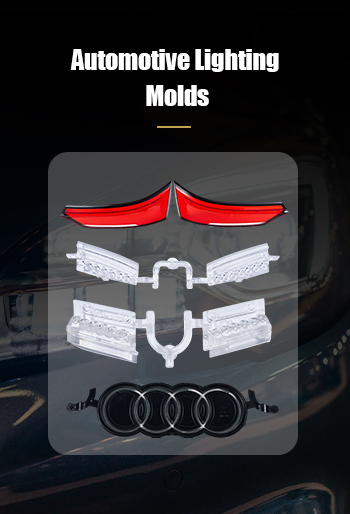
We specialize in custom automotive lighting molds, including Two-Shot, Three-Color and Overmolding Mold solutions. With advanced multi-material molding technology, we help customers manufacture complex lighting components with excellent appearance, reliable performance and stable mass production capability.

Key Capabilities
Multi-Material & Multi-Color Molding
Two-shot, three-color and overmolding technologies for complex automotive lighting parts
Precise material combination and color separation

Applications
Headlamp lenses
Taillight components
Light guides
Reflectors, bezels and other precision lighting parts

Custom
Customized solutions based on product structure, materials and production needs
Complete support from mold design, manufacturing to testing
  • Taizhou Renxin Mould Co., Ltd.

    Audi Logo Optical Lens

    Challenge:
    The product required a two-shot molding process, and the gate locations were dense and very small. This made the hot runner design and injection balance more difficult. If the gate size, gate position, or flow balance were not well controlled, it could easily cause short shots, flow marks, weld lines, flash, color mixing, or unstable bonding between the two materials/colors.

    Solution:
    We optimized the hot runner layout and gate position based on the product structure, material flow path, and visible surface areas. Mold-flow analysis was used to check filling balance, pressure distribution, weld line position, and air trap risk before finalizing the design. For the dense and small gate locations, precision machining was used to ensure accurate gate size and stable material flow. The sealing area between the first-shot and second-shot parts was carefully designed to prevent flash and color mixing. During trial molding, melt temperature, mold temperature, injection speed, holding pressure, and valve-gate timing were fine-tuned to achieve stable filling, clear color separation, and strong bonding performance.

  • Taizhou Renxin Mould Co., Ltd.

    Volkswagen Logo Optical Lens

    Challenge:
    The product required a two-shot molding process, and the gate locations were dense and very small. This made the hot runner design and injection balance more difficult. If the gate size, gate position, or flow balance was not well controlled, it could easily cause short shots, flow marks, weld lines, flash, color mixing, or unstable bonding between the two materials/colors.

    Solution:
    We optimized the hot runner layout and gate position based on the product structure, material flow path, and visible surface areas. Mold-flow analysis was used to check filling balance, pressure distribution, weld line position, and air trap risk before finalizing the design. For the dense and small gate locations, precision machining was used to ensure accurate gate size and stable material flow. The sealing area between the first-shot and second-shot parts was carefully designed to prevent flash and color mixing. During trial molding, melt temperature, mold temperature, injection speed, holding pressure, and valve-gate timing were fine-tuned to achieve stable filling, clear color separation, and strong bonding performance.

  • Taizhou Renxin Mould Co., Ltd.

    Dongfeng Fog Lamp Lens

    Challenge:
    The product required a clear and uniform corn-kernel texture while also meeting ECE optical requirements. The texture had to be accurately machined without affecting the light distribution performance. At the same time, the two-shot molding process required precise material bonding, stable positioning, and strict control of color separation. Any texture distortion, poor bonding, flash, or color mixing could affect both the appearance and the functional performance of the lamp.

    Solution:
    We optimized the texture machining process to ensure the corn-kernel pattern was clear, uniform, and repeatable. The texture depth, corner radius, and surface finish were carefully controlled to avoid light distortion and surface defects. For ECE compliance, we worked closely with the optical design requirements and controlled the key optical areas during mold design, machining, and polishing. The mold structure and injection parameters were adjusted to maintain stable light transmission and consistent optical performance. For the two-shot molding process, we optimized the rotary or positioning structure, material flow, gate design, and sealing areas to prevent flash, color mixing, and bonding defects. Trial molding was carried out to fine-tune mold temperature, injection speed, holding pressure, and cooling time, ensuring good appearance, stable bonding, and compliance with functional requirements.

  • Taizhou Renxin Mould Co., Ltd.

    GAC Toyota Tail Lamp Protective Cover

    Challenge:
    The product required fine and consistent leather texture details on the surface. Because the texture was delicate, any machining error, polishing issue, or unstable molding condition could cause texture loss, uneven surface appearance, or demolding marks. At the same time, the two-shot molding process required accurate positioning, stable material bonding, and clear color separation. Poor sealing or positioning could easily lead to flash, color mixing, bonding defects, or visible parting lines.

    Solution:
    We optimized the mold surface treatment process to ensure the leather texture was clear, uniform, and repeatable. The texture depth, draft angle, and surface finish were carefully controlled to avoid texture damage during demolding. For the two-shot molding process, we optimized the rotary or positioning structure, sealing area, gate location, and material flow path. During trial molding, mold temperature, injection speed, holding pressure, and cooling time were adjusted to improve bonding strength, prevent flash and color mixing, and maintain stable surface quality.

  • Taizhou Renxin Mould Co., Ltd.

    Kaida Front Screen Lamp Photometric Lens

    Challenge: Two-Shot Alignment and a Long Visible Surface

    This project concerns a two-shot mold for an elongated PC automotive lighting lens with a high-gloss appearance requirement. The tooling review needs to coordinate both injection stages while considering the shot interface, surrounding frame and mounting geometry.

    Parting-line locations, gate vestiges and ejector-contact areas should be checked against the approved appearance zones. Positioning between shots also needs to be reviewed against the mating geometry and assembly dimensions. Surface acceptance limits should be defined for the actual lens design.

    Solution: Coordinated Positioning, Gating and Surface Review

    The engineering approach for this two-shot PC lens tooling brings the positioning features, shut-off details, gate layout and cooling arrangement into one review. The tooling specification should identify the surfaces requiring polishing, where witness marks are permitted and how the first-shot part is supported for the next injection.

    • Elongated visible lens area: review gate and parting-line positions relative to the visible face and polished areas. Agree the appearance zones, permitted witness marks and surface inspection method.
    • Interface between injection stages: review part support, locating features and shut-off areas around the shot interface. Define the boundary appearance, dimensional requirements and any specified interface checks.
    • Surrounding frame and mounting features: review ribs, assembly dimensions, ejector-contact locations and access for demolding. Agree the mating-part fit, critical dimensions and permitted marks on non-visible areas.

    During the mold trial review, assess the shot boundary, gloss consistency and visible flow or joint lines against the approved drawings and agreed samples or acceptance criteria. Record any tooling corrections with the part revision and trial conditions so that subsequent checks use the same requirements.

  • Taizhou Renxin Mould Co., Ltd.

    Dongfeng Sokon Headlamp Photometric Lens

    Challenge: High-Gloss Appearance Across a Broad Curved Lens

    This project concerns a curved headlamp lens mold for a PC automotive lighting part. The specified two-shot process needs to be reviewed alongside the high-gloss, mirror-like appearance requirement. The sample lens views show a broad curved face with a black perimeter structure and local projecting details.

    The drawing should map the primary viewing area, edge transitions and assembly references. Appearance acceptance needs to cover the face and its curved margins, while the perimeter needs its own fit criteria. Use the released part data to locate the intended shot interface and the areas available for mold contact.

    Solution: Coordinate Surface Finish, Perimeter Tooling and Inspection

    For this high-gloss PC lens tooling, agree the finish reference and inspection zones before specifying the machining and polishing work. Review the proposed gate positions, parting lines, support and ejection arrangement against the actual lens surfaces and perimeter geometry.

    • Broad curved viewing face: define the surfaces requiring the specified finish and the viewing conditions for trial inspection. Identify how gloss variation, flow or joint lines, scratches and polishing marks will be assessed.
    • Black surround and local edge features: review the shot boundary, shut-off areas and support for the next injection. Mark permitted gate and ejection-contact locations on the approved drawing.
    • Perimeter and assembly references: check the lens outline, edge transitions and relevant locating features against the mating data. Agree the dimensions to inspect after molding.

    During trial review, record appearance observations and dimensional checks against the drawing revision and agreed samples. Include any specified optical tests in the project acceptance plan. Our car light distribution lens mold page outlines the wider component tooling scope.

  • Taizhou Renxin Mould Co., Ltd.

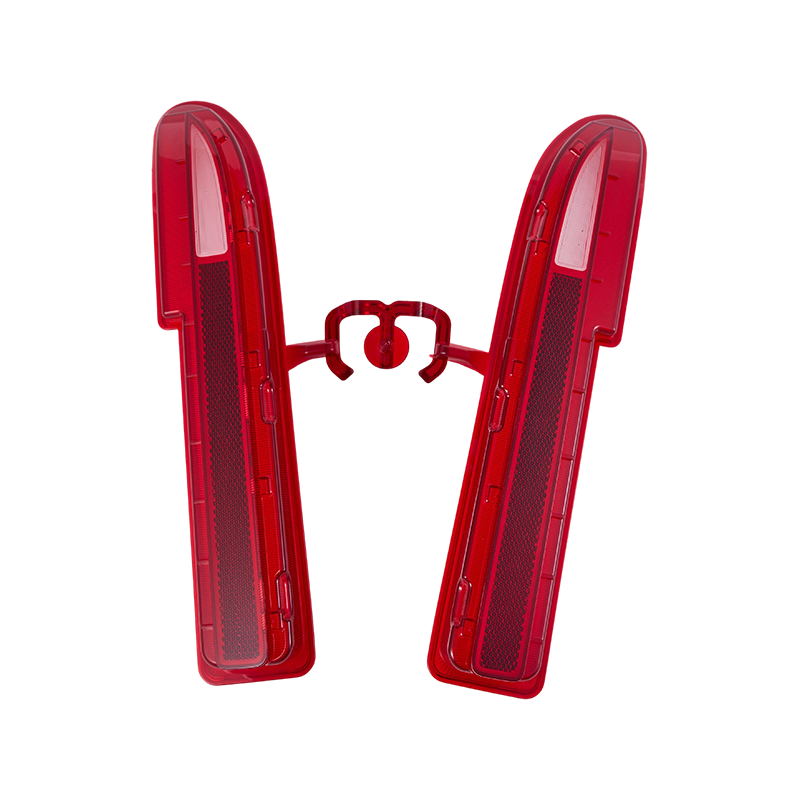
    Dongfeng Sokon Tail Lamp Photometric Lens

    Challenge:
    The main challenge was to achieve three different technical requirements on one part at the same time. The product required a bright mirror-like appearance in specific areas, precise optical texture in the functional regions, and stable three-shot molding performance throughout the entire process. It was necessary to ensure accurate positioning and bonding between the three shots while also maintaining high surface quality and clear texture replication. Any instability in mold alignment, material flow, temperature control, or molding parameters could lead to defects such as poor bonding, flow marks, weld lines, gloss inconsistency, texture distortion, or deformation.

    Solution:
    We optimized the three-shot mold structure and injection sequence to ensure accurate positioning and reliable bonding between different materials. High-precision machining and fine polishing were applied to the mirror-finish areas to achieve the required bright surface effect. For the optical texture areas, the mold surface and processing parameters were carefully controlled to ensure accurate texture replication and stable optical performance. In addition, the gate layout, cooling system, and molding parameters were optimized through mold trials to improve filling balance, reduce defects, and ensure consistent appearance and molding quality.

  • Taizhou Renxin Mould Co., Ltd.

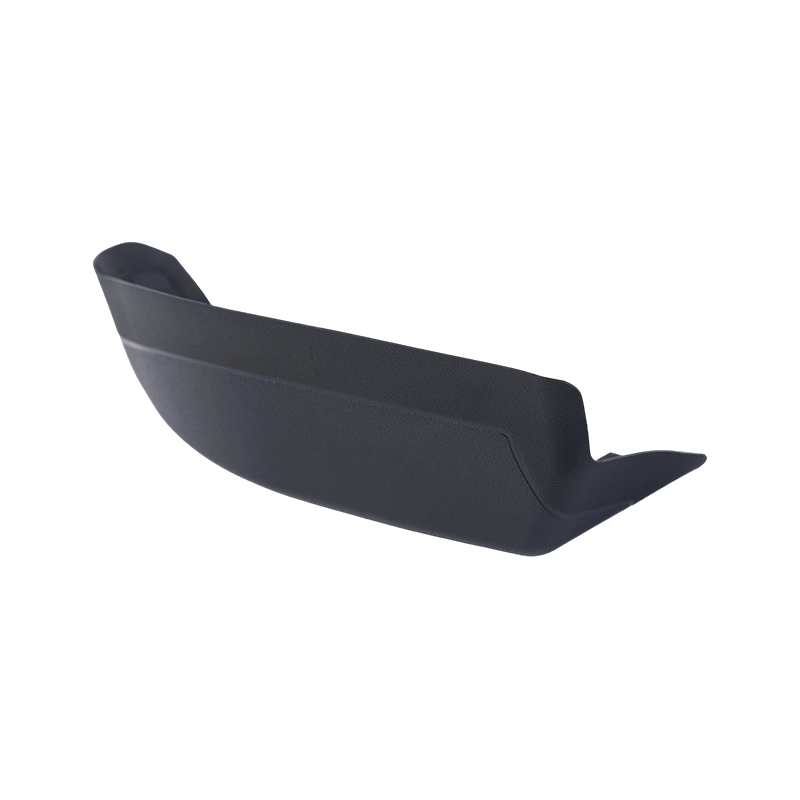
    GAC Tail Lamp Protective Cover

    Challenge: Sand-Grain Appearance Across a Curved Cover

    This two-shot tail lamp protective cover project specifies TPE and PP, with a consistent sand-grain texture and uniform surface appearance. The photographs show curved cover forms, grainy visible surfaces, contour changes and raised perimeter features. The tooling review needs to relate these appearance zones to the released geometry and the defined role of each material.

    For this 2K sand-grain tail lamp cover mold, a visible contour line in a photograph should not automatically be treated as the interface between shots. Approved part data should distinguish geometric transitions, texture boundaries and material boundaries before the mold structure is finalized.

    Solution: Coordinate Texture Zones, Material Interfaces and Edge Geometry

    The review can focus on four checks specific to this cover:

    • Grain reference and transitions: identify the surfaces requiring sand-grain texture and agree a reference sample or texture specification. Review grain continuity around curved faces and local transitions, together with permitted gloss differences and inspection conditions.
    • TPE and PP interface: confirm the actual resin grades, shot allocation and interface design. Assess support, shut-off and access for the next shot against the part data; material names alone do not establish bonding or sealing performance.
    • Curved perimeter and release: review draft, parting, ejection and permitted contact areas around the raised edges. Define inspection points for edge shape, fit and any flash limits required by the drawing.
    • Filling and appearance checks: review gate, vent and cooling proposals against the textured viewing zones. Trial inspection should assess flow or joint lines, grain replication and local gloss against the agreed acceptance reference.

    Use the agreed assembly datums and matching-part data to check the cover contour separately from texture appearance. Any material-interface or functional tests should be defined for the project. For related applications, see our car light protective cover molds.

Taizhou Renxin Mould Co., Ltd.

About Us

Founded in 2013, Taizhou Renxin Mould Co., Ltd. is a high-tech enterprise specializing in the R&D, manufacturing, and sales of automotive lighting molds and lighting products. The company has obtained over 30 patents and has been recognized as a National High-Tech Enterprise in China.

Supported by advanced CAD / CAE / CAM technologies, we provide value-driven product optimization and mold design solutions, including DFM analysis, mold flow analysis, optical simulation, and thermal simulation.

As a professional OEM mold solution provider, we have supplied mold development and manufacturing services for many well-known automotive brands, including BYD, Geely, SAIC, and General Motors.

In addition, we are certified to ISO 9001:2015 and IATF 16949 quality management systems.

  • 0

    Professionals
  • 0

    Founded In
  • 400+

    Patents
  • 400+

    Sales Countries And Regions

Automotive Lighting Manufacturing Capabilities

  • Product Design & Engineering
    Our engineering team provides comprehensive product analysis and optimization to ensure manufacturability, performance, and cost efficiency before mold production.

    * DFM Analysis

    * Product Structure Optimization

    * Optical Simulation

    * Mold Flow Analysis

    * Thermal Simulation

  • Mold Design & Manufacturing
    Equipped with advanced mold design and manufacturing capabilities, we develop high-precision injection molds for automotive lighting components with reliable quality and long service life.

    * Automotive Lighting Mold Design

    * Precision CNC Machining

    * EDM Processing

    * Mold Assembly

    * Mold Testing

  • Injection Molding Technologies
    Specialized in complex molding technologies for automotive lighting applications, enabling multi-material integration, enhanced functionality, and premium appearance.

    * Two-Shot Injection Molding

    * Multi-Color Injection Molding

    * Overmolding

  • Injection Molding & Assembly
    Beyond mold manufacturing, we provide injection molding and assembly services to deliver finished automotive lighting components ready for production integration.

    * Injection Molding

    * Optical Component Production

    * Surface Treatment

    * Component Assembly

    * Quality Inspection

  • Quality Control & Project Management
    With strict quality control and professional project management, we ensure every project meets automotive industry requirements from prototype to mass production.

    * Project Management

    * Dimensional Inspection

    * Material Verification

    * Trial Production

    * Quality Assurance

OEM Services

We provide OEM customers with integrated solutions in injection mold manufacturing, injection molding, and stamping products. Trusted by leading automotive manufacturers including BYD, Geely, Chery, SAIC, General Motors, Liuzhou Automobile, BAIC Group, Dongfeng Motor, and Changan Automobile.


INQUIRY NOW
1
2
3
4
5
6
7
9
10
12
13
14
15
16
17
18
19
20
21
22
23
24
26
27
28
29
30
31
33
34
36
37
38
39
40
41
43
44
45
1
2
3
4
5
6
7
9
10
12
13
14
15
16
17
18
19
20
21
22
23
24
26
27
28
29
30
31
33
34
36
37
38
39
40
41
43
44
45

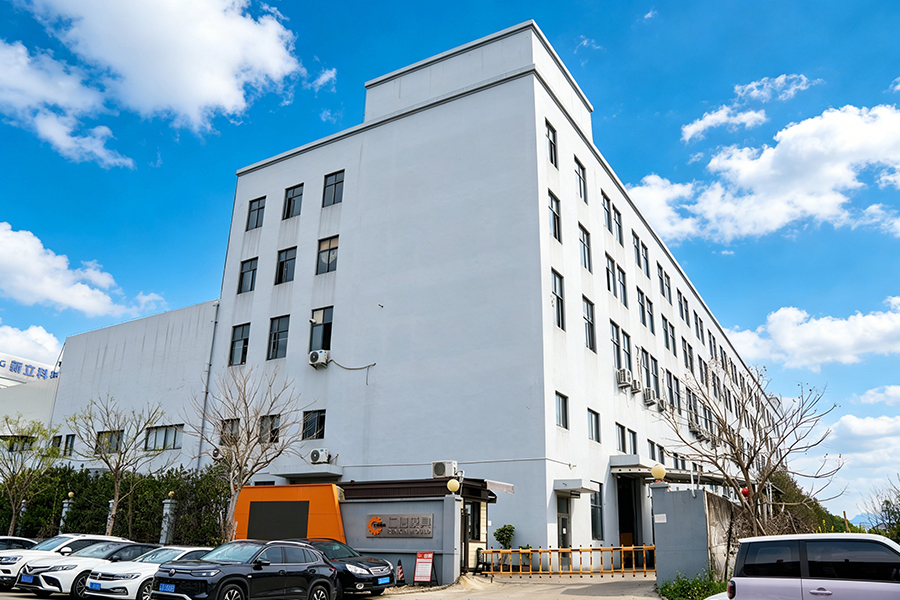
Factory Tour

With a professional technical team possessing strong R&D capabilities, all mold product design and development utilizes CAD/CAM/CAE technology and 3D solid modeling technology.

  • Taizhou Renxin Mould Co., Ltd.
  • Taizhou Renxin Mould Co., Ltd.
  • Taizhou Renxin Mould Co., Ltd.
  • Taizhou Renxin Mould Co., Ltd.
  • Taizhou Renxin Mould Co., Ltd.
  • What type of molds does Renxin Mould specialize in?

    We are a high-tech enterprise specializing in automotive lighting molds. We are particularly proficient in the R&D and manufacturing of dual-color/tri-color injection molds, thick-wall light guide molds, lens molds, and BMC reflector molds
  • What are your core technical strengths?

    1) Patented technologies (e.g., rotary molding) honed in lighting molds;
    2) Automotive-grade quality systems compliant with IATF 16949;
    3) End-to-end engineering capabilities from design (CAD/CAE) to manufacturing and inspection;
    4) Extensive project experience serving numerous leading OEMs.
  • How do you ensure mold precision and long-term stability?

    First, Hardware – utilizing high-precision CNC, CMMs, and other advanced equipment.
    Second, Systems – strictly implementing IATF 16949 standards for full-process traceability.
    Third, Process – employing professional fitting/polishing teams and rigorous trial molding procedures to ensure mold lifespan and production stability.

INQUIRY NOW

Contact Us And Get A Free Quote Today!